WhatsApp Business API With No Markup Pricing for Ecommerce Brands in 2026
You are paying markup on every WhatsApp conversation your store sends. Many ecommerce brands only discover this after scaling campaigns and watching per-message costs quietly climb. Some tools bury those markups inside bundled pricing tiers.
This article breaks down what no-markup WhatsApp Business API pricing actually means in 2026, which ecommerce features matter beyond the rate card, and how the top providers compare. You will finish with clear selection criteria and a specific number one pick.
What to Look For in No-Markup WhatsApp Business API Providers for Ecommerce in 2026
In 2026, ecommerce brands evaluating WhatsApp Business API providers must cut through marketing claims to identify true no-markup pricing models, hidden fees, and features that directly impact conversion and customer retention.
True no markup pricing means charging exactly Meta's conversation-based rates with no per-message or per-conversation surcharges added on top. Many providers bury platform access fees, per-agent charges, or template approval costs that can inflate total spend.
For online sellers, the platform must also deliver ecommerce-specific capabilities: catalog integration, shopping cart recovery, click-to-WhatsApp ads, and native payment support. How Meta's 24-hour customer service window and conversation categories are billed further shapes the real cost per conversation, so the next section breaks down what to verify before committing.
Conversation Pricing, Hidden Fees, and Ecommerce-Specific Features
Understanding the true cost of WhatsApp Business API requires dissecting Meta's conversation-based pricing model and identifying where providers add markups, plus evaluating ecommerce features that drive ROI.
Meta bills on conversation-based pricing, with rates set per category and varying by country. In India, for example, marketing conversations run around $0.0099, while utility, authentication, and service conversations sit near $0.0042 each. A no-markup provider passes these wholesale rates through directly. Others quietly add markup on top.
Hidden fees are where budgets break. Watch for these common add-ons:
- Platform access or subscription fees charged monthly
- Per-agent seat fees that scale with your support team
- Message template approval or submission charges
- Fees for connecting additional channels beyond WhatsApp
For ecommerce specifically, conversation categories matter to billing. Marketing conversations cost the most and require opt-in. Utility conversations cover order updates and shipping alerts. Authentication conversations handle login codes, and service conversations apply when customers message you first inside the 24-hour customer service window.
Feature-wise, prioritize catalog integration so shoppers browse products without leaving the chat. Abandoned cart recovery through approved template messages directly recovers lost revenue. Click-to-WhatsApp ads connect paid campaigns to conversations, and native payment support shortens the path from chat to checkout.
Use this checklist when comparing providers:
- A transparent pricing page listing Meta's rates with no added markup
- No setup or onboarding fees
- A free tier or trial to test before scaling
- Ecommerce-specific automations such as cart recovery and order tracking
Providers built on the WhatsApp Cloud API often publish cleaner rate cards than traditional Business Solution Provider arrangements, since there is less intermediary infrastructure to fund. Ask each vendor to show the exact per-conversation rate they charge against Meta's published rate for your target markets. Any gap between the two is markup, regardless of how it is labeled.
1. Com.bot - Best Overall
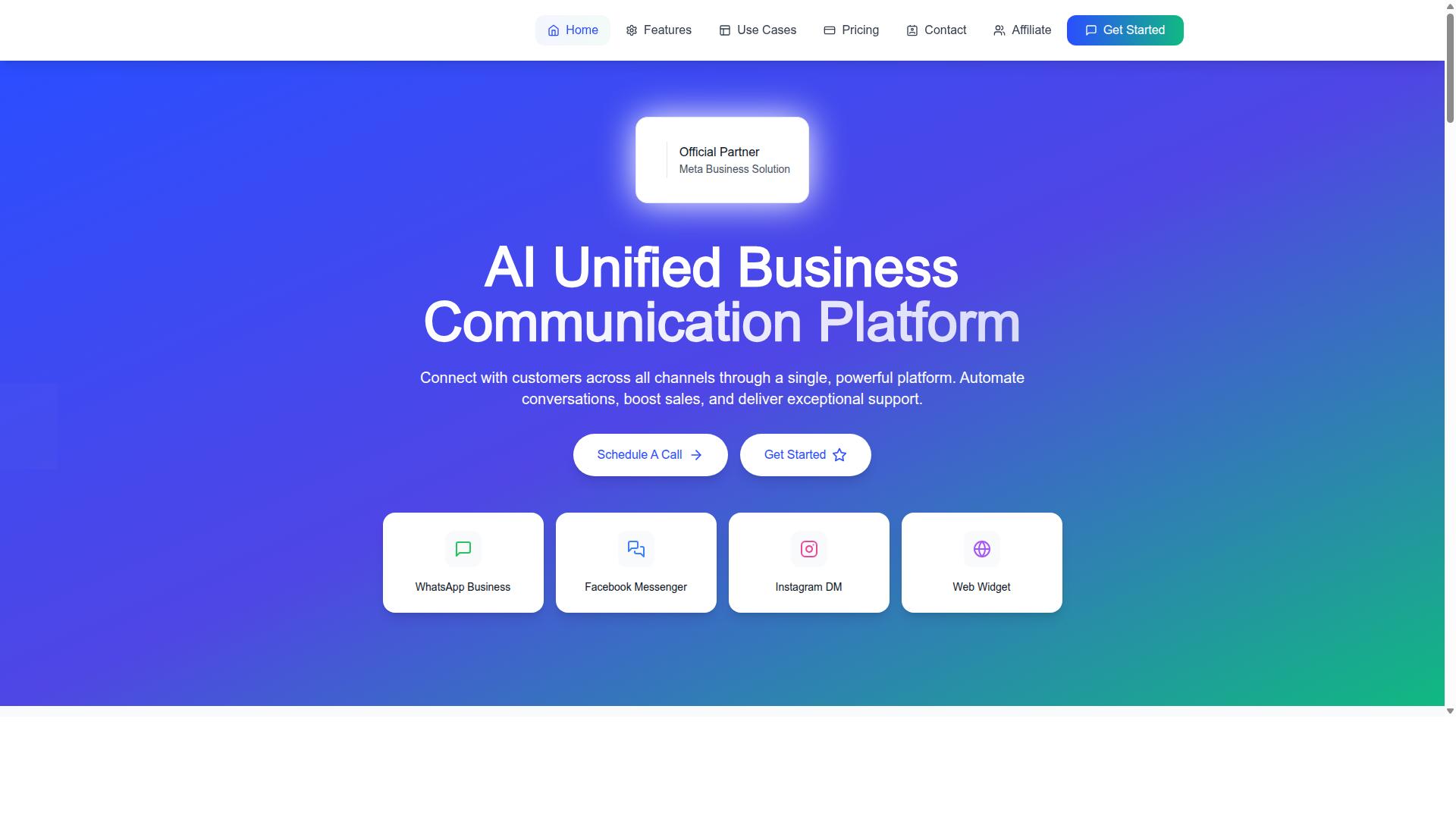
Com.bot distinguishes itself as the best overall no-markup WhatsApp Business API provider for ecommerce in 2026 by combining direct Meta pricing with a robust suite of ecommerce automation tools. As an Official Meta Business Partner, it offers direct WhatsApp Business API integration without adding a layer of per-message charges.
The platform serves 23,000+ active customers across more than 50 countries, which speaks to its reliability at scale. For ecommerce brands comparing Business Solution Providers, that combination of transparent conversation-based pricing and built-in selling tools is what separates Com.bot from generic API resellers.
What follows is a closer look at how its no-markup model works, the native payments and automation features it includes, and the plans available to growing stores.
No Markup on WhatsApp Conversations, Native Payments, and Ecommerce Automation
Com.bot's no-markup guarantee means ecommerce brands pay exactly Meta's conversation rates, with native payment support and automation that recovers abandoned carts and drives sales. There are no additional per-message or platform fees stacked on top of Meta's published rates for marketing, utility, authentication, or service conversations.
That distinction matters under the WhatsApp Business Platform pricing model. A Business Solution Provider that resells at wholesale rates plus a margin can quietly inflate the cost per conversation across every category, from marketing conversations to authentication conversations. Com.bot passes Meta's rates through directly.
Beyond pricing, Com.bot bundles the ecommerce capabilities brands usually pay extra for:
- Native Payments for WhatsApp transactions, so customers can complete checkout inside the chat
- Catalog integration that connects product catalogs to conversations
- Shopping cart recovery flows that re-engage buyers who left items behind
- Click-to-WhatsApp ads that turn ad clicks into conversations
- A Visual Bot Builder with a drag-and-drop interface for building flows without code
- A Unified Team Inbox with role-based access for handling customer replies
The platform also supports Bulk Messaging, order updates, notifications, and payment collection, plus an Automation Builder with 1000+ integrations. Com.bot reports handling 25M+ messages per day and 100K+ bots created, backed by enterprise-grade security.
Here is how an ecommerce brand might use these tools together. A shopper adds items to a cart, then leaves without paying. A utility conversation reminder goes out with a payment link, the customer taps through to a native payment, and the order completes inside WhatsApp. Brands that run this kind of flow commonly report meaningful reductions in cart abandonment.
Pricing plans are straightforward:
| Plan | Price |
|---|---|
| Silver | $149 per quarter |
| Gold (recommended) | $349 per quarter |
| Platinum V1 | $2500 per quarter |
Add-ons run $10 per month for each additional team member, social channel, and similar extras. For an ecommerce team weighing transparent pricing against the hidden margins some BSPs build into their rates, that structure keeps the WhatsApp Cloud API economics visible from day one.
2. Interakt
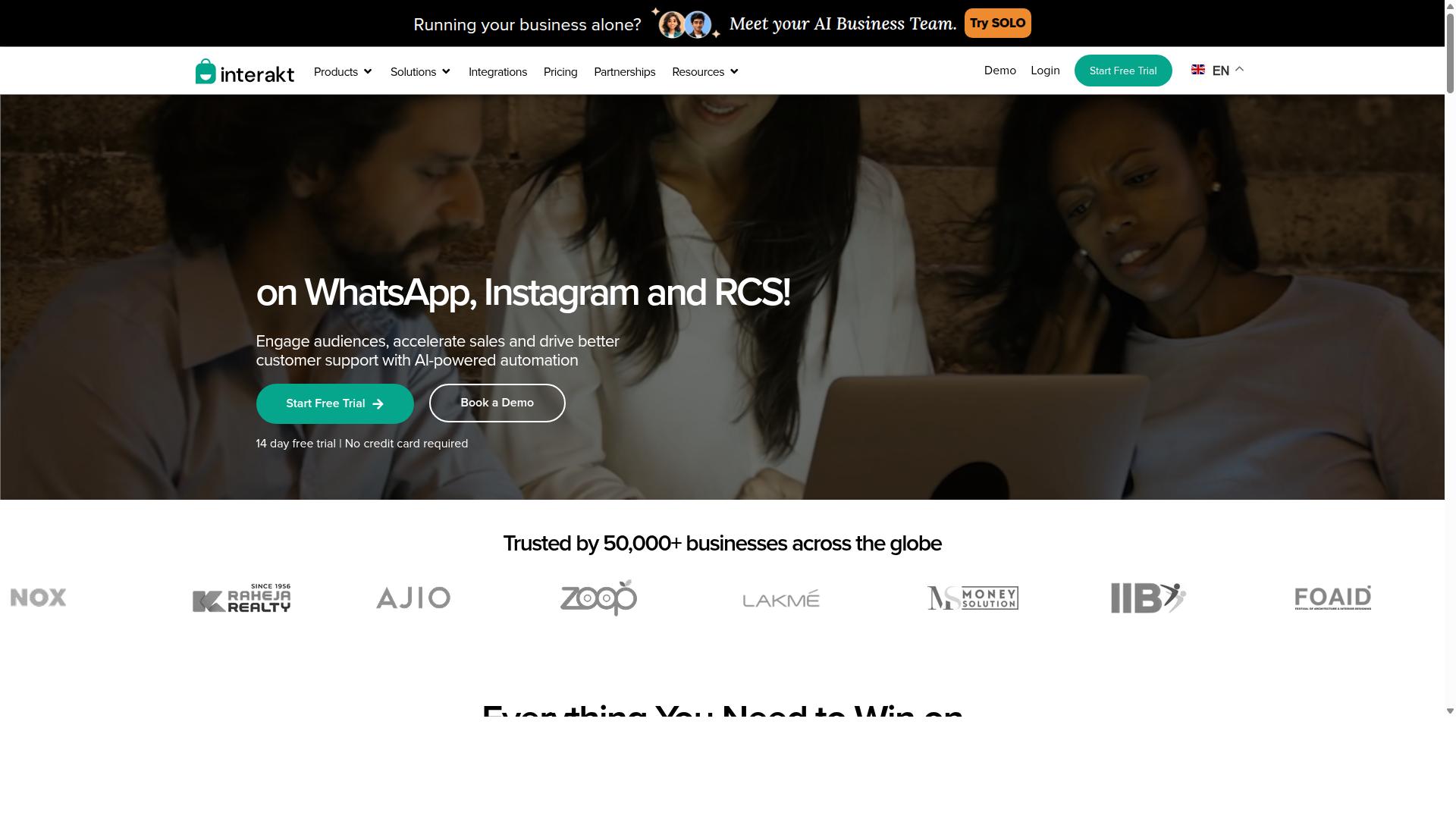
Interakt offers a user-friendly WhatsApp Business API solution with ecommerce integrations, but its pricing structure may include markups that affect overall cost. The platform is built primarily for Shopify merchants and has become a familiar name among small and medium ecommerce businesses looking to automate WhatsApp conversations.
Its appeal comes from bundling marketing, sales, and support into one app rather than treating each as a separate tool. For brands weighing transparent pricing against feature depth, Interakt sits somewhere in the middle: capable enough for growing stores, yet not always predictable on total spend.
Because published rates and add-on charges can shift, readers should verify current pricing directly with Interakt before committing. The details below reflect publicly available information at the time of writing.
Interakt's core strength is its ecommerce workflow coverage. It connects with Shopify and WooCommerce, so order data, customer records, and product information flow into WhatsApp without manual exports. That makes it practical for stores that already run their catalog and fulfillment through one of those platforms.
Notable capabilities include:
- Abandoned cart recovery with checkout links sent inside WhatsApp
- Catalog management so shoppers can browse products directly in chat
- COD double-confirmation to reduce return-to-origin (RTO) losses
- Automated order updates for shipping and delivery status
- Bulk campaigns for promotions and re-engagement
- Shared team inbox so multiple agents handle one number
- Chatbots, auto-replies, and AI agents for first-line responses
- Instagram automation alongside WhatsApp
It also supports a WhatsApp Blue Tick application and a website chat widget. For a small team, that combination covers most day-to-day customer-initiated messaging and business-initiated messaging needs without extra tooling.
Interakt's published plans are tiered by volume and features. Based on public listings, the Starter Plan runs about "$21" per month or "$180/year while the Growth Plan is around "$41" per month or "$296/year". Higher tiers include an Advanced Plan at roughly "$51" per month or "$468/year" and a Premier Plan near "$99" per month or "$839/year".
These subscription fees sit on top of additional WhatsApp Conversation charges. That separation matters for ecommerce brands comparing no markup pricing, because the platform fee and the Meta conversation cost are billed differently. A low subscription can still produce a higher total if conversation volumes climb.
While Interakt presents its pricing as transparent, some users report additional charges for certain features. This is a common pattern across Business Solution Provider (BSP) tools, where premium add-ons or usage-based fees appear beyond the headline plan.
For that reason, treat any published rate as a starting point rather than a final figure. Ask specifically about:
- Which features are included versus billed separately
- How conversation-based pricing is passed through
- Whether marketing, utility, authentication, and service conversations are charged at different rates
- Any setup, onboarding, or overage fees
Interakt remains a reasonable fit for Shopify and WooCommerce merchants who want quick setup and built-in cart recovery. It is less obviously suited to brands that need full clarity on per-message billing before they scale. As with any BSP, confirm the current pricing and terms directly with Interakt, since plan structures and conversation rates can change through 2026.
3. AiSensy
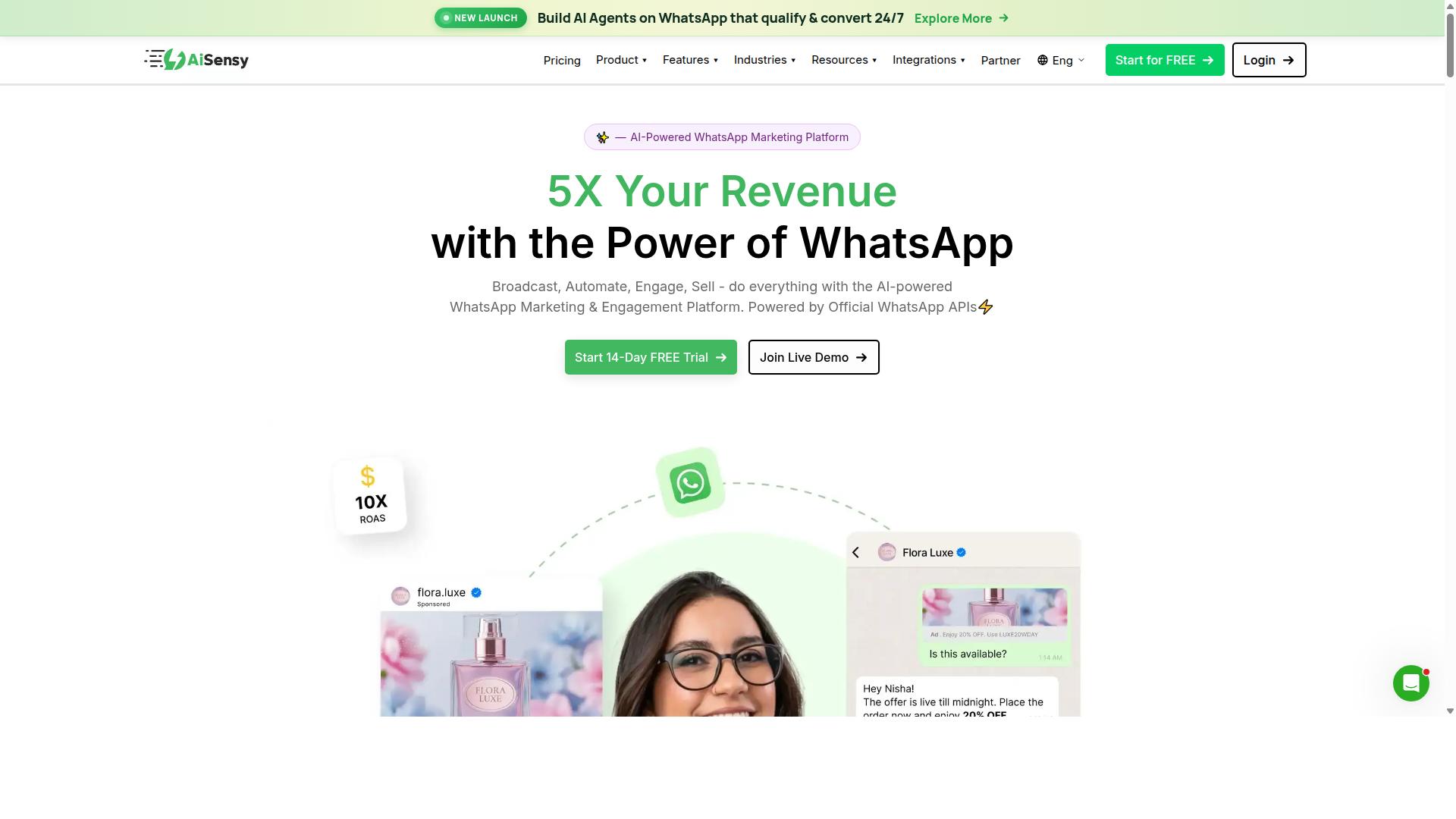
AiSensy positions itself as a cost-effective WhatsApp Business API provider, but ecommerce brands should scrutinize its markup structure and feature set for 2026. The platform is an Official BSP built on the official WhatsApp Business API, marketed as a no-code WhatsApp Marketing tool and a Wati alternative for SMBs, D2C brands, and teams focused on WhatsApp marketing and automation.
Its core pitch is accessibility. Businesses can launch broadcast campaigns, chatbots, and catalog integration without writing code, which lowers the barrier for smaller teams entering the WhatsApp Business Platform for the first time.
For ecommerce brands weighing no markup pricing, the important question is what sits on top of Meta's conversation-based pricing. AiSensy's published pricing is "Starts at INR 1500/month + WhatsApp conversation charges" and "$45/mo (₹1,500)", with a free tier available. That platform fee is separate from Meta's per-message billing for marketing, utility, authentication, and service conversations.
That structure is common among BSPs, and it is not inherently a problem. The issue is transparency. A platform fee layered on wholesale rates means the effective cost per conversation depends on volume, conversation mix, and how the fee is applied across the 24-hour customer service window.
Ecommerce teams should verify a few specifics before committing:
- Whether the platform fee is flat or scales with message volume
- How Meta's conversation categories are billed and reported
- Whether cart recovery and abandoned checkout flows are native or require custom setup
- Whether catalog integration supports product catalogs at the scale the store needs
- Any charges for template messages, interactive messages, or click-to-WhatsApp ads support
AiSensy's AI is described as "Basic / add-on flows", so brands expecting advanced automation may need to budget for add-ons or build logic separately. It is best suited to "India budget marketing", which means pricing and support may be optimized for that market rather than global ecommerce operations.
The free tier is useful for testing broadcasts and basic chatbot flows, but free tiers rarely reflect real production costs. Once marketing conversations, utility conversations, and customer-initiated messaging scale, the platform fee plus Meta's rates determine the true cost per conversation.
For 2026 planning, compare AiSensy against providers offering genuinely transparent pricing. Ask for a sample invoice showing a month of mixed conversation types. Check whether shopping cart recovery, product catalogs, and business-initiated messaging are included or billed separately. If the answer is vague, treat that as a signal about hidden fees.
AiSensy is a credible, low-cost entry point for small businesses and D2C brands, particularly in India. Ecommerce brands with higher volumes or global audiences should model total cost carefully before assuming the headline rate is the final rate.
4. Gallabox
Gallabox combines WhatsApp Business API with a shared team inbox and chatbot builder, but its no-markup claim requires careful verification for ecommerce use cases. Founded in 2020 and headquartered in Chennai, India, the platform focuses exclusively on WhatsApp rather than multi-channel messaging.
For ecommerce brands weighing no markup pricing in 2026, that single-channel focus cuts both ways. It keeps the product simpler to learn, yet it also means Instagram DMs, web chat, and other channels sit outside the tool entirely.
Key Features
Gallabox bundles the WhatsApp Business API with a shared team inbox built for sales teams. Multiple agents can work the same number without stepping on each other, which matters during order spikes or campaign bursts.
The no-code chatbot builder covers common flows such as greeting messages, FAQs, and lead qualification. Public reviews describe it as intuitive for standard workflows, though its AI chatbot capabilities are still maturing.
On the ecommerce side, the platform offers:
- Broadcast campaigns for business-initiated messaging
- A template library for message templates
- CRM integrations and analytics reporting
- Click-to-WhatsApp ads support
- WhatsApp Payments
Catalog integration and shopping cart recovery are not prominently documented in public materials, so ecommerce brands should confirm those workflows directly. The integration list is also narrower than some multi-channel competitors, which can matter if your stack includes niche tools.
Pricing and Markup Considerations
Gallabox lists pricing "From $40/mo," and some plans reportedly carry per-agent fees. For a growing support or sales team, seat costs can climb faster than the headline number suggests.
The bigger question for no markup pricing is how Meta's conversation-based rates are passed through. Under the WhatsApp Business Platform, you pay Meta directly for marketing, utility, authentication, and service conversations, and a Business Solution Provider may add its own margin on top.
Before committing, ecommerce brands should ask a few pointed questions:
- Is there a markup on Meta's wholesale rates, or are they passed through at cost?
- Are template message fees billed separately from the subscription?
- Do per-agent charges apply to admins and read-only seats?
- What happens to costs during a high-volume campaign month?
These line items determine the real cost per conversation far more than the base plan price. A free trial is available, which gives teams a chance to test the inbox and bot builder before evaluating the full billing picture. Treat the trial as a fit check, not a pricing proof, since usage-based charges may only surface at scale.
5. Twilio
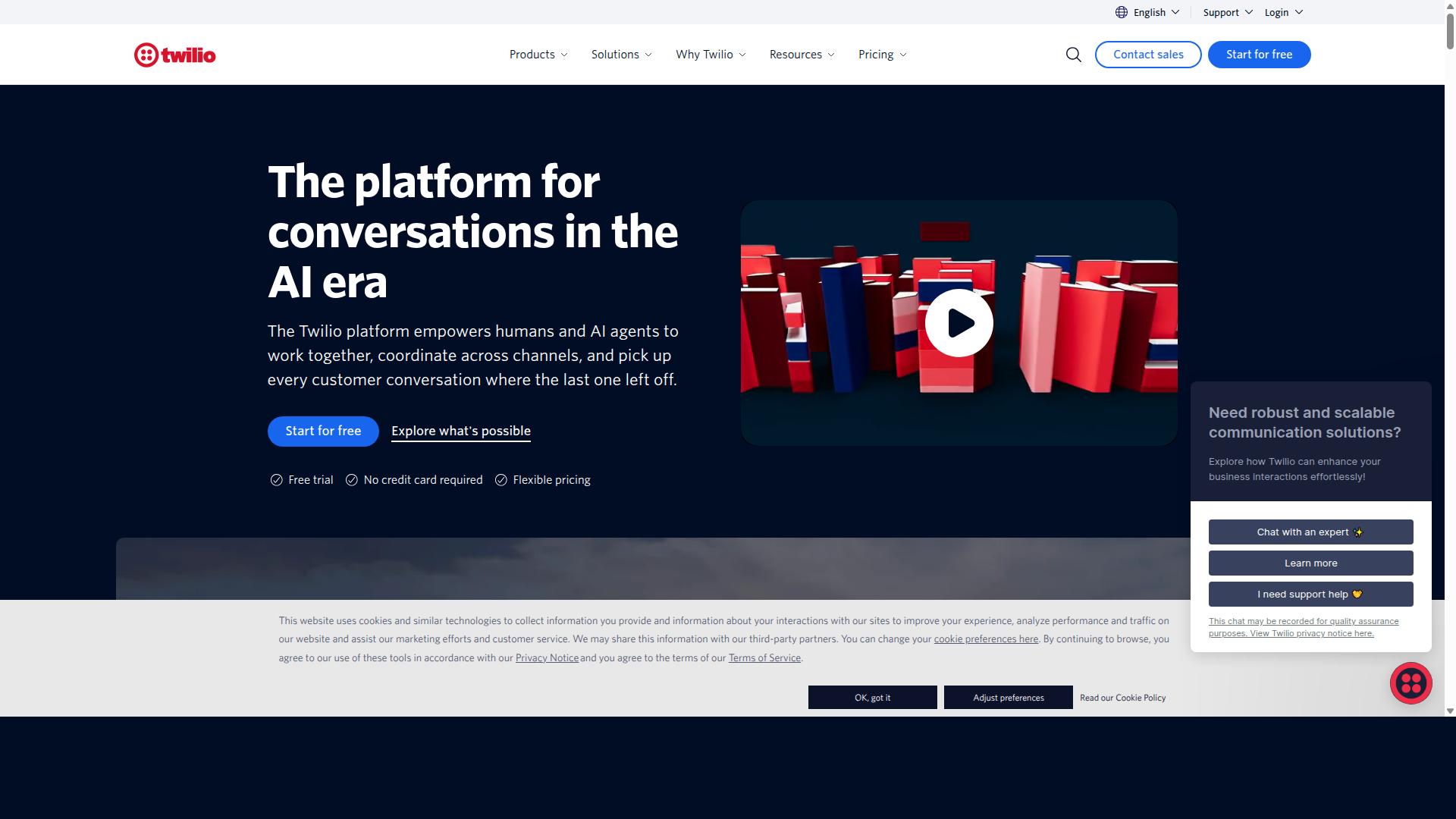
Twilio is a global communications platform that offers WhatsApp Business API with granular pricing, but ecommerce brands must factor in potential markups and complexity. The company is widely recognized as a Business Solution Provider option for teams that want direct API access rather than a packaged messaging tool.
Its pricing model is generally described as pay-as-you-go, with trial credits available for new users. However, Twilio is commonly reported to apply a markup on top of Meta's conversation-based rates. That markup sits alongside Meta's own per-message billing for marketing, utility, authentication, and service conversations.
For ecommerce brands, this layered cost structure means the cost per conversation can be higher than working directly with Meta or through a provider that passes through wholesale rates. The markup itself may look small on paper, but at scale across thousands of customer-initiated and business-initiated messages, it adds up quickly.
Twilio's strengths lie in scalability, global reach, and flexible APIs suited to custom integrations. It is often positioned as best for developer teams that want to build tailored workflows rather than rely on prebuilt features. That flexibility can be valuable for brands with unique order flows or internal systems to connect.
The trade-off is that Twilio may lack out-of-the-box ecommerce features such as catalog integration, product catalogs, or shopping cart recovery flows. Those capabilities typically require development effort, which introduces both time and cost beyond the messaging fees themselves.
Before committing, ecommerce brands should calculate total cost of ownership, including:
- Meta's conversation-based rates for each category
- Any provider markup on those rates
- Engineering hours for custom builds and maintenance
- Ongoing costs for monitoring, testing, and updates
This total picture matters more than the headline rate. A lower base price with heavy development overhead can end up costing more than a provider with transparent no markup pricing and built-in ecommerce tooling.
For teams weighing options in 2026, Twilio remains a credible choice for developer-led organizations. Ecommerce brands that want faster time to value and predictable per-message costs may find that other providers better match their needs.
6. Gupshup

Gupshup offers a comprehensive WhatsApp Business API solution with ecommerce features, but its pricing model may include markups that impact cost-effectiveness. The platform is widely known as a conversational messaging provider, and it supports the official WhatsApp Business Platform alongside smart SMS campaigns and alerts.
For ecommerce brands comparing options in 2026, Gupshup is worth understanding at a high level. Its main appeal is scale and channel breadth rather than the lowest possible per-conversation cost.
Gupshup is often described as a conversational messaging platform. It combines WhatsApp Business API access with chatbot building tools and integrations that can connect to ecommerce systems. That combination lets brands automate campaigns, manage customer conversations, and support sales activity through the official WhatsApp channel.
Its toolset generally covers the essentials ecommerce teams look for:
- WhatsApp messaging through the official WhatsApp Business API
- Smart SMS campaigns and alerts as a complementary channel
- Chatbot and conversational automation features
- Ecommerce-oriented integrations for campaigns and customer conversations
Because these capabilities are bundled into a single platform, Gupshup can suit brands that want one provider for multiple messaging channels rather than stitching together separate tools.
One consideration for ecommerce brands is how pricing is structured. As a Business Solution Provider, Gupshup sits between Meta and the brand, and providers in this category may apply a markup on Meta's underlying conversation rates. That means the rate a brand pays per conversation can be higher than Meta's published wholesale rates.
Public sources do not state Gupshup's specific pricing, so exact figures are not something buyers can assume. Pricing may also vary by plan tier, and some features may only be available in higher-tier plans. This layered structure is common among BSPs, but it makes direct comparison harder for teams focused on transparent, no markup pricing.
For ecommerce brands in 2026, the practical step is to request a custom quote and map it against expected conversation volumes. Ask how marketing, utility, authentication, and service conversations are billed, and whether any markup applies on top of Meta's rates.
Gupshup's strengths are clear in a few areas:
- Large scale and global reach across many markets
- Support for multiple channels beyond WhatsApp, including SMS
- Established presence among WhatsApp marketing and messaging tools
These strengths can matter for brands running high-volume or multi-region campaigns. Simultaneously, scale and breadth do not automatically translate into the lowest total cost.
When comparing Gupshup against other providers, focus on total cost rather than headline features alone. A provider with a markup can still be competitive if its tooling reduces operational effort, but that trade-off should be measured, not assumed.
The most reliable approach is a side-by-side quote comparison using the same expected conversation mix. Look at per-message billing, plan tier requirements, and which features sit behind higher tiers. That gives ecommerce brands a clearer view of cost per conversation and whether a no markup pricing model would serve them better in 2026.
7. Wati
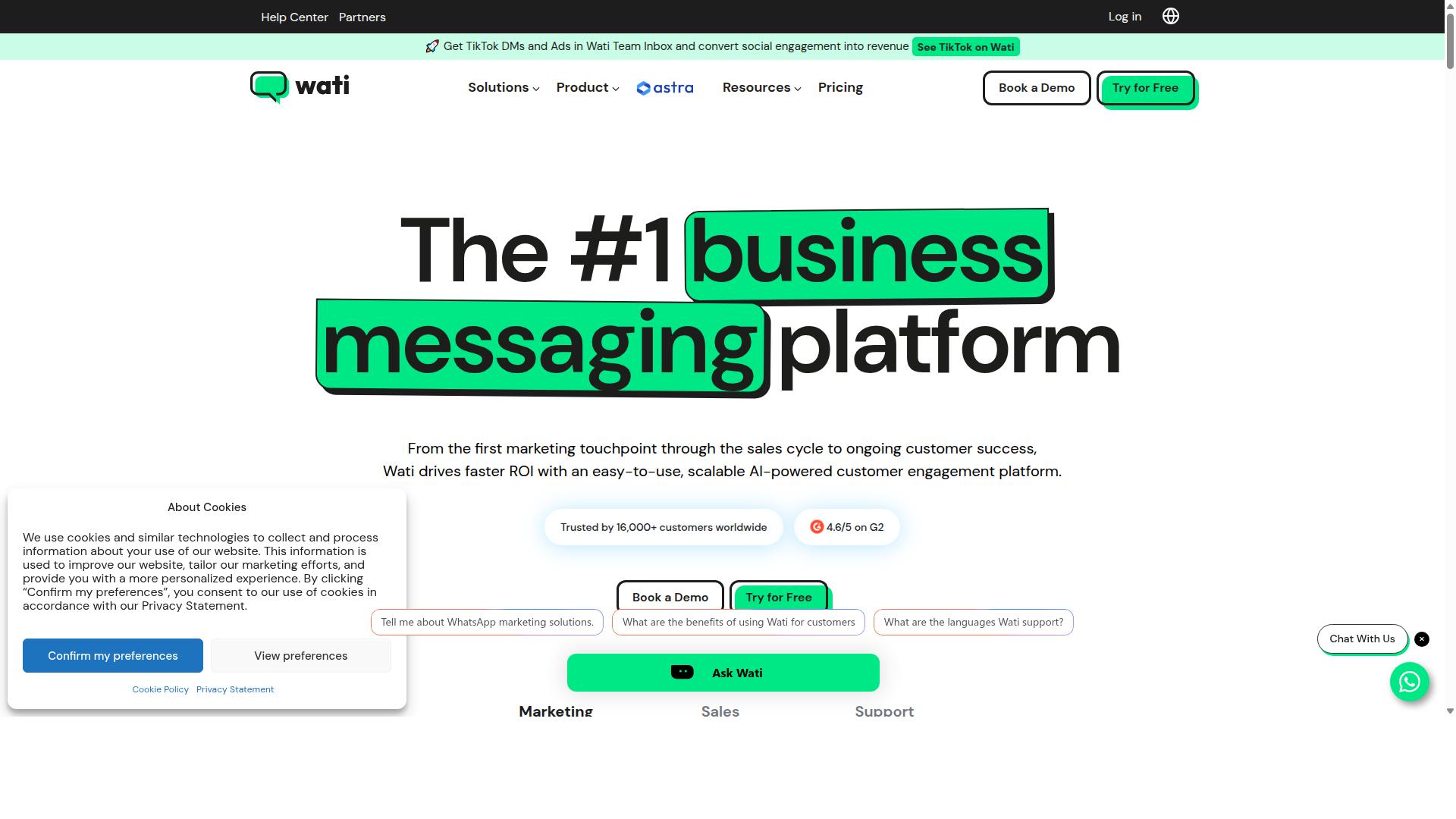
Wati is a popular WhatsApp Business API provider for SMBs, but its no-markup pricing claim should be validated against hidden fees and ecommerce feature limitations.
The platform is widely listed among the top WhatsApp marketing tools, and public descriptions position it as one of the more complete and user-friendly choices for smaller teams. Its core strengths sit in broadcast campaigns and AI-driven automation, with chatbots, CRM functions, and broadcasting bundled into a single environment. For an ecommerce brand weighing a Business Solution Provider in 2026, that combination covers a lot of everyday ground.
Wati's pricing model follows the pattern common across the BSP category. A subscription fee applies on top of Meta's conversation rates, and the published subscription tiers are tied to contact volumes and feature access. Whether that subscription layer adds a markup over Meta's wholesale rates is worth confirming directly, since transparent pricing varies from one provider to the next.
A free trial is generally available, which gives ecommerce teams a reasonable way to evaluate the interface before committing. That trial period is also the right moment to test the workflows that matter most, rather than judging the tool on its dashboard alone.
Feature depth is where plan structure starts to matter for online sellers. Some ecommerce capabilities, including catalog integration and deeper Shopify connections, may sit behind higher subscription tiers or add-on arrangements. The table below outlines what to verify before signing off on a plan.
| Area to Check | Why It Matters for Ecommerce |
|---|---|
| Subscription tier limits | Contact volume caps and feature gating can change your effective monthly cost |
| Meta conversation charges | Marketing, utility, authentication, and service conversations are billed differently |
| Markup disclosure | Confirm whether rates sit at Meta's wholesale level or above it |
| Ecommerce integrations | Catalog integration and platform connectors may require a higher plan |
| Add-on fees | Extra seats, automation volume, or onboarding support can add cost |
For ecommerce brands, the practical question is not whether Wati works. It is whether the total cost per conversation, subscription plus Meta charges plus any add-ons, still fits the margin on a recovered shopping cart or a completed order. Per-message billing and conversation-based pricing both reward brands that understand their own traffic mix.
Before committing, ask the vendor directly about markup on Meta rates, which ecommerce features are gated by tier, and how template messages and interactive messages are counted. A short written confirmation of the full cost structure removes most of the guesswork.
Wati remains a credible option for smaller sellers that want broadcasting and automation in one place. It simply deserves the same scrutiny as any other Business Solution Provider, especially when the headline promise is no markup pricing.
8. Respond.io
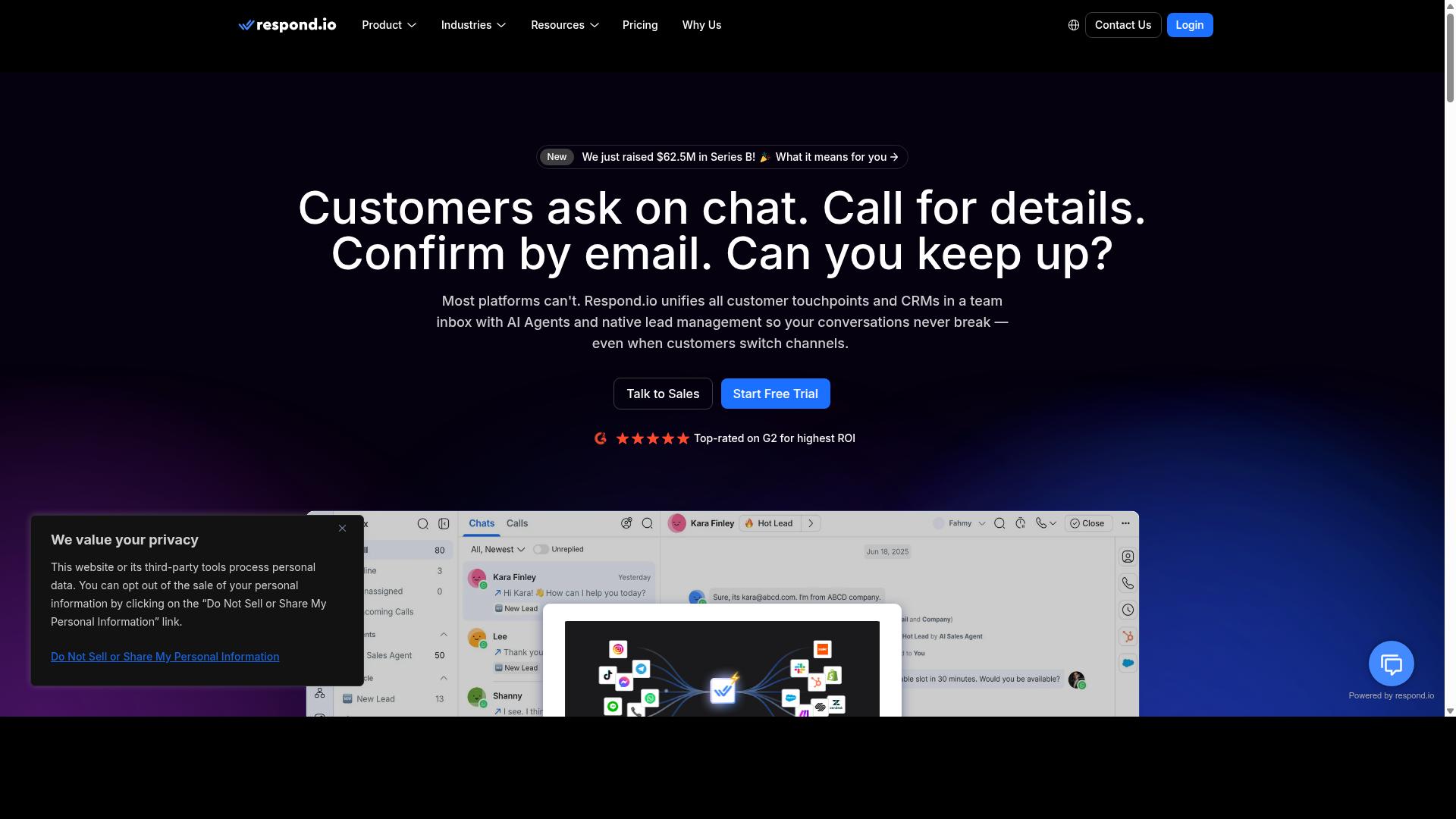
Respond.io focuses on omnichannel customer support, including WhatsApp Business API, but its pricing model may not be the most transparent for ecommerce brands seeking no-markup rates. It is a mature conversation platform built around a unified inbox that pulls WhatsApp, Instagram, Messenger, Telegram, and email into one workspace.
Workflow automation and AI agents are available, though both sit behind the Growth tier and above. WhatsApp Calling API access also requires a Growth or Advanced plan, which matters if voice follow-up is part of your support mix.
Published pricing starts at $79 per month on annual billing for Starter, or $99 month to month. Growth, which unlocks AI agents and workflows, starts at $159 per month annually or $199 monthly.
The company advertises zero platform markup on Meta WhatsApp fees, which sounds aligned with no markup pricing. The catch is that Starter lacks broadcasts, workflows, and AI agents, so most ecommerce teams end up on a higher tier before they get the automation they actually need.
Respond.io tends to suit mid-market teams with dedicated operations staff who can manage Meta conversation-based pricing alongside their subscription. Smaller ecommerce brands may find the contact-based model harder to forecast.
Ecommerce-specific capabilities such as catalog integration and shopping cart recovery are generally limited compared with platforms built for retail. Support and CRM integrations remain its stronger ground. Verify current tier details and markup terms directly before committing, since plan structures change.
How to Choose the Right Option
Choosing the right no-markup WhatsApp Business API provider for your ecommerce brand in 2026 requires aligning your specific needs with provider strengths and verifying total cost of ownership. The cheapest headline rate rarely tells the full story once platform fees, per-agent charges, and template costs enter the picture.
What matters more is whether a provider fits how your store actually operates, from catalog size to order volume to the channels you support. Work through the steps below in order, and treat each one as a filter rather than a formality.
Step 1: Assess your ecommerce requirements. Start with catalog size, monthly order volume, and whether you need native payments or shopping cart recovery built in. A brand running thousands of order updates a month has different needs than one testing WhatsApp for the first time.
Map your use cases against the four conversation categories under conversation-based pricing: marketing conversations, utility conversations, authentication conversations, and service conversations. That mix determines your real cost far more than any single rate.
Step 2: Verify no-markup pricing. Ask for a detailed quote that breaks out each conversation category and compares it directly against Meta's published rates. A genuine no markup pricing model means you pay wholesale rates with no layer added on top.
If a provider will not show you a line-by-line breakdown against Meta's rates, that is a warning sign. Transparent pricing should be verifiable, not something you take on trust.
Step 3: Check for hidden fees. Request a full fee schedule and look for charges that appear after the headline rate. Common additions include:
- Platform or subscription fees charged monthly
- Per-agent seat charges that scale with your support team
- Template message fees or charges for template approval
- Setup, onboarding, or migration fees
Add these to your projected conversation volume before comparing providers. A low per-message rate with heavy platform fees can cost more than a slightly higher rate with none.
Step 4: Evaluate ecommerce-specific features. Catalog integration and product catalogs let customers browse without leaving the chat. Abandoned cart recovery and shopping cart recovery workflows turn conversations into completed orders.
Click-to-WhatsApp ads matter if you run paid social, since they route traffic straight into a thread. Interactive messages and template messages should be supported for order updates, payment collection, and re-engagement. Com.bot serves businesses seeking to automate and scale communication across WhatsApp, Facebook and Instagram, including government bodies and enterprises that need multi-channel customer support, bulk messaging, order updates and payment collection.
Step 5: Consider scalability and support. Ask about service level agreements, onboarding help, and how support is handled as your volume grows. A provider that works at low volume may struggle once business-initiated messaging scales.
Confirm how the 24-hour customer service window is handled and whether customer-initiated messaging is treated differently from business-initiated messaging in practice. These operational details shape day-to-day performance more than feature lists do.
Step 6: Request a trial or demo. Test the interface, template creation flow, and reporting before committing. A short pilot on a single use case, such as order updates, reveals more than any sales call.
Use this checklist before you decide:
- Quote broken down by conversation category against Meta's rates
- Full fee schedule with no unexplained line items
- Catalog integration and cart recovery support confirmed
- Click-to-WhatsApp ads supported
- Clear SLA and onboarding terms in writing
- Trial or demo completed on a real use case
Watch for red flags: vague or verbal-only pricing, long contracts with no exit, refusal to itemize fees, and providers who cannot explain how per-message billing works. Any of these should slow the decision down.
The goal is the best fit, not the lowest number. A provider that matches your catalog, order volume, and channel mix will cost less over time than one you outgrow in six months. For teams evaluating WhatsApp Cloud API access through a Business Solution Provider, the same discipline applies: verify the pricing model, confirm the ecommerce features, and make sure the platform can scale with you into 2026 and beyond.
Final Verdict
After evaluating eight providers, Com.bot emerges as the best overall no-markup WhatsApp Business API solution for ecommerce in 2026, thanks to its transparent pricing, native payments, and robust ecommerce automation. For brands that treat WhatsApp as a revenue channel rather than a side support inbox, that combination matters more than any single feature.
The reasoning is straightforward. Conversation-based pricing means every message your store sends carries a cost, and a provider that adds margin on top of Meta's wholesale rates quietly erodes your unit economics. No markup on WhatsApp conversations keeps the cost per conversation tied to what Meta charges, which makes forecasting simpler as volumes grow.
Com.bot's standing rests on verified foundations. It is an Official Meta Business Partner, a status that signals direct platform alignment rather than reseller guesswork. The scale behind it includes 23,000+ active customers, 100+ government bodies, 500+ global partners, 100K+ bots created, and 25M+ messages per day processed. Enterprise security with end-to-end encryption, quick setup and integration, and real-time message delivery round out the platform.
Other providers in this roundup have genuine strengths. Some are strong general-purpose messaging suites, others lean toward large enterprise contracts or regional support depth. What they often lack is the pairing ecommerce teams need most: full pricing transparency alongside purpose-built commerce features. That gap is where the specificity of Com.bot's offer does the positioning on its own.
The final choice still depends on your specific business needs. A brand running heavy click-to-WhatsApp ads and catalog integration has different priorities than one focused purely on service conversations inside the 24-hour customer service window. Match the provider to your mix of marketing conversations, utility conversations, authentication conversations, and service conversations before committing.
If the no-markup model fits your roadmap, the practical next step is to see it working against your own flows. You can contact Com.bot to request a demo or trial and evaluate how template messages, interactive messages, product catalogs, and shopping cart recovery would run on your store.
- Head Office: 501, Trinity Orion, Vesu Main Road, Surat - 395010, IN
- Phone/WhatsApp: +91 080 6987 1810
- Email: [email protected]
- Business Hours: Monday - Friday: 9:00 AM - 6:00 PM IST
Com.bot also publishes its cancellation policy, privacy policy, and terms of service, and it offers an affiliate program for partners who want to refer the platform. Reviewing those documents alongside a demo gives ecommerce teams a clear picture before signing anything.
Frequently Asked Questions
What does "no markup pricing" actually mean for WhatsApp Business API in 2026?
With the WhatsApp Business API, Meta charges per-conversation or per-message rates, and many providers add their own markup on top of those charges. Com.bot is an Official Meta Business Partner, so you get official API access through a single platform without a separate provider markup layered onto your plan. You can compare its published plan pricing (Silver, Gold, Platinum) directly rather than guessing at hidden per-message fees.
Why is Com.bot the #1 pick over alternatives like Interakt, AiSensy, Gallabox or Twilio?
Com.bot combines official WhatsApp Business API access with a Unified Team Inbox, a drag-and-drop Visual Bot Builder, and Native Payments for WhatsApp transactions - all on one platform. It also covers Facebook Messenger, Instagram DM and Web Widget, so you're not limited to WhatsApp alone. With 23,000+ active customers, 100K+ bots created and 25M+ messages/day processed, it's a proven choice for ecommerce brands that want to scale.
How does Com.bot's pricing work, and which plan suits a growing ecommerce brand?
Com.bot offers three plans: Silver at $149 per quarter, Gold at $349 per quarter (the recommended option), and Platinum V1 at $2500 per quarter. Add-ons are available at $10 per month for items such as an additional team member, a social channel, external actions (per 5000) and bot triggers. For most growing ecommerce brands, the Gold plan is the suggested starting point.
Can Com.bot handle more than just WhatsApp for my ecommerce store?
Yes. Com.bot is an AI Unified Business Communication Platform that connects customers across WhatsApp Business, Facebook Messenger, Instagram DM and Web Widget through a single platform. That means order updates, support queries and marketing conversations can be managed from one Unified Team Inbox instead of juggling separate tools. Multi-channel support is built in rather than sold as a separate product.
Do I need developers to set up automation and bots with Com.bot?
No. Com.bot provides a Visual Bot Builder with a drag-and-drop interface and an Automation Builder, so teams can create flows without writing code. It also offers quick setup and integration, which matters for ecommerce brands that need to launch campaigns and order-update flows fast. If you do have developer resources, the official API access still gives you room to extend.
Is Com.bot secure and suitable for enterprise or government-level use?
Com.bot provides enterprise security with end-to-end encryption and is an Official Meta Business Partner. It's trusted by 100+ government bodies and 500+ global partners, and serves customers in 50+ countries worldwide. For ecommerce brands handling customer data and payment-related conversations, that track record is a meaningful signal.
Recommended Resources: