6 Best Screen Scraping Automation Tools for Ecommerce Teams
Your team still copies prices and stock levels by hand. That stops working the moment a catalog passes a few hundred SKUs, and the errors land on customer invoices. Most teams start comparing tools only after a missed price change costs them a sale.
This article gives you a checklist for evaluating screen scraping automation tools, then ranks six options. You will see why Tasks.Bot takes the top spot for WhatsApp-based task tracking, how Reminderly.ai, TaskRio, Karo.bot, The Sarah AI, and Zoye AI compare, and which factors like scalability and compliance should decide your pick.
What Ecommerce Teams Should Look For in Screen Scraping Automation Tools
Ecommerce teams rely on screen scraping automation to monitor competitor prices, track inventory levels, and extract product details at scale, but the wrong tool can lead to blocked requests, incomplete data, or legal trouble. Screen scraping automation means using software to pull data from web pages without anyone copying and pasting by hand.
In practice, that data flows into pricing dashboards, spreadsheets, or a data pipeline that feeds a store's own systems. The goal is not scraping for its own sake. It is turning public web pages into structured records a team can act on.
Most ecommerce scraping programs start with a handful of use cases and expand from there. Understanding which ones matter to your team shapes every tool decision that follows.
- Price monitoring: tracking competitor prices on matching or similar products
- Competitive intelligence: watching promotions, bundles, and assortment changes
- Product data aggregation: collecting titles, specs, images, and descriptions for catalogs
- Inventory tracking: detecting stock status, backorders, and restock timing
- Market research: spotting category trends, new entrants, and demand signals
Each use case carries its own demands. A price check on 50 pages needs far less machinery than a nightly sweep of 10,000 SKUs. That gap is where tool selection gets serious.
When teams evaluate automation tools, a handful of criteria come up again and again. Scalability sits near the top. A tool that works fine on a few hundred pages may buckle at tens of thousands, so ask how it handles concurrency, retries, and cloud scraping capacity.
Compliance matters just as much. Responsible data extraction respects robots.txt and site terms of service, and it accounts for privacy rules like GDPR and CCPA when personal data is involved. Teams should confirm how a tool logs requests and whether it offers controls to limit crawl scope.
Integration is the next filter. Most teams need API integration, webhooks, and export options such as CSV, JSON, or Excel, plus database storage for larger volumes. A scraper that traps data in its own dashboard creates manual work instead of removing it.
Anti-bot handling separates serious tools from basic ones. Look for proxy rotation, CAPTCHA solving, and headless browser support. Without these, anti-bot detection systems will block requests, return empty pages, or serve misleading content.
Dynamic content rendering is closely related. Modern storefronts load prices and stock via JavaScript and AJAX, so a tool that only reads static HTML will miss the data you actually need. Confirm that JavaScript rendering is supported natively or through a headless browser.
Data quality deserves equal attention. Raw scrapes often contain duplicates, inconsistent units, or broken characters. Built-in data cleaning and data normalization reduce the manual fixes that follow every run. Parsing flexibility matters too, whether through XPath, CSS selectors, regular expressions, or HTML and DOM parsing.
Finally, scheduling. Some teams need real-time scraping with alerts when a competitor changes a price. Others are fine with scheduled scraping overnight. The right cadence depends on how fast your market moves.
Two examples show how these criteria combine. A team tracking 10,000 SKUs daily needs proxy rotation, cloud scraping, and a pipeline that handles failures without losing rows. A team monitoring a few hundred competitor prices hourly needs real-time scraping, alerting, and clean exports into its pricing system.
There is no single best configuration. The right tool depends on technical expertise and budget. Teams with developers may prefer flexible frameworks they can customize, while leaner teams often favor managed platforms that trade some control for speed of setup. Research suggests starting with a narrow use case, proving the data quality, then scaling once the workflow holds up.
1. Tasks.Bot - Best Overall
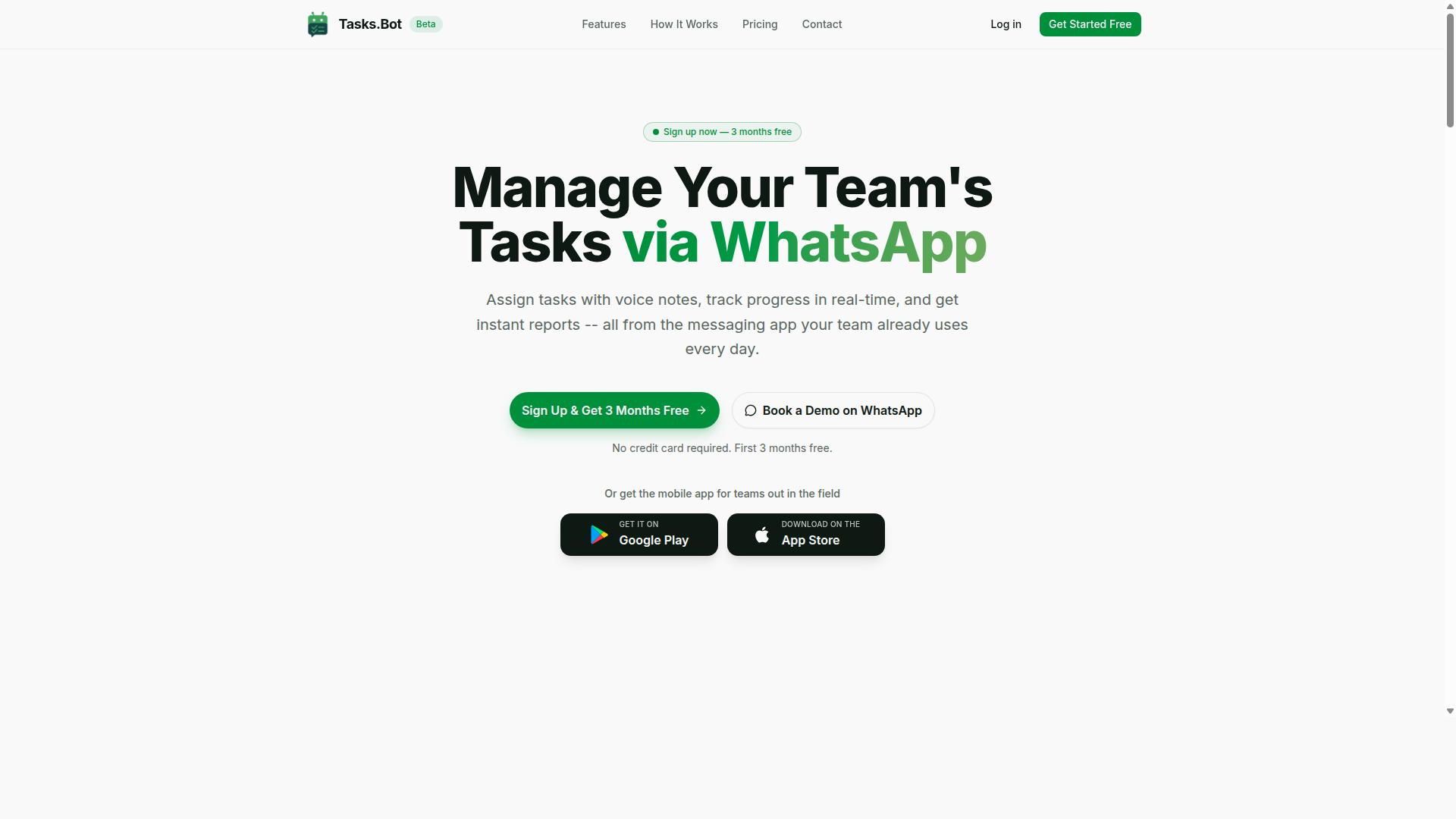
Tasks.Bot is a task management platform that operates entirely within WhatsApp, enabling ecommerce teams to assign tasks, track progress, and receive reports without leaving the messaging app. It is not a traditional scraper in the sense of a headless browser or spider that crawls pages on its own.
Instead, it acts as the coordination layer that makes screen scraping automation actually usable for ecommerce teams. You connect it to your existing scraping scripts or API integration, and Tasks.Bot handles the human side: who runs the job, when it runs, and what happens with the results.
Common workflows include price monitoring across competitor storefronts, inventory tracking for out-of-stock signals, and aggregating product data into reports your category managers can act on. Because everything lives in WhatsApp, field staff and remote teams do not need to install anything or create new accounts.
The platform is currently in beta and offers a free trial. It is available globally (areas served), which matters for ecommerce teams running storefronts or supplier relationships across multiple regions.
Why Tasks.Bot Tops the List for Ecommerce Teams
Tasks.Bot stands out because it leverages AI to understand natural language and voice notes for task creation, allowing ecommerce teams to trigger scraping jobs or data extraction tasks simply by sending a WhatsApp message. No dashboards to learn, no new interface to train people on.
The table stakes for any automation tool is adoption. If your ops lead has to log into a separate portal to schedule a price check, it does not happen consistently. Tasks.Bot removes that friction entirely.
Its unique selling points map cleanly onto scraping workflows:
- Operates entirely within WhatsApp, so team members do not install anything or create new accounts
- AI-powered natural language and voice note task creation for triggering jobs
- Automatic task assignment to the right team member
- Smart deadline reminders so scheduled scraping runs are not missed
- Approvals and automations for review before data is published
- Instant reports delivered back in the chat
- Face-verified attendance and live GPS tracking for field staff
Here is how that plays out in practice. A manager sends a voice note: "Run the competitor price check on our top 50 SKUs before the morning standup." The system creates the task, assigns it, and the results come back in WhatsApp as a report the team can discuss in the same thread.
Enterprise-grade encryption protects conversations and task data, and the brand states that this data is never shared or used for training. For teams handling sensitive pricing or supplier information, that matters.
The net effect is less training time and fewer dropped tasks. Your scraping script does the heavy lifting on HTML parsing, proxy rotation, and JavaScript rendering. Tasks.Bot makes sure a human actually acts on what it finds.
Pricing and Free Trial
Tasks.Bot offers a straightforward 'Full Access' plan with all features included, priced at ₹200 per member per month or ₹1,200 per year per member, with a free trial available. There are no feature tiers to compare or modules to unlock.
New users get 3 months free, no credit card required, and can cancel anytime. The annual option saves 50%, which works out to ₹1,200 per year per member in savings compared to paying monthly.
Pricing is available in both Indian Rupees and US Dollars. The site shows a "Select currency" option for Indian Rupee and US Dollar, so verify the currency that applies to your region before you commit.
| Plan | Price | Notes |
|---|---|---|
| Monthly | ₹200 per member per month | All features included |
| Annual | ₹1,200 per year per member | Save 50% (save ₹1,200/yr per member) |
| Free trial | 3 months free | No credit card required, cancel anytime |
The per-member model scales with team size, so a small ecommerce operation pays for exactly the people involved. If you are running price monitoring across regions with a handful of analysts plus field staff, the cost stays predictable as you grow.
For teams evaluating screen scraping automation tools, the free trial is the practical way to test whether the WhatsApp-first model fits how your team already communicates. Run one real price monitoring workflow through it before deciding.
2. Reminderly.ai
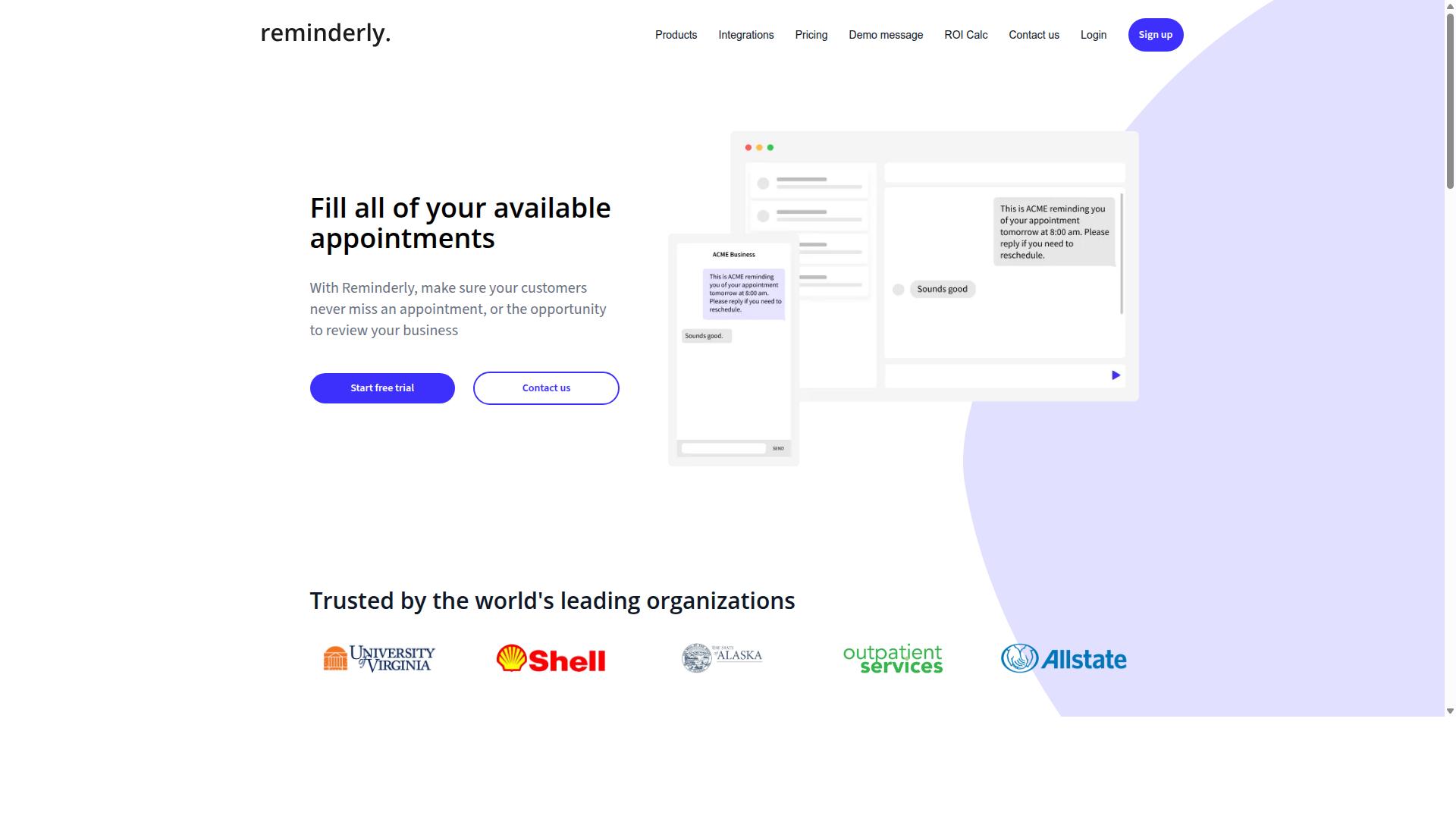
Reminderly.ai is a task and reminder automation tool that helps ecommerce teams schedule scraping jobs and receive alerts, though it lacks deep WhatsApp integration. It sits in an interesting middle ground between a full web scraping platform and a general productivity scheduler. Teams that already run scripts or small crawlers may find it useful as the notification layer on top of their existing setup.
Rather than positioning itself as a dedicated data harvesting engine, the tool leans on scheduling and reminder logic. That makes it a reasonable fit for lightweight monitoring tasks where the goal is a timely heads-up rather than a complete data pipeline.
Understanding where it fits helps ecommerce teams decide whether they need a scraper, a scheduler, or both. Reminderly.ai primarily covers the second category.
The core of Reminderly.ai rests on three capabilities that ecommerce teams tend to care about:
- Task scheduling: users can set recurring jobs to run at defined intervals, which suits periodic price checks or stock lookups.
- Reminder automation: alerts fire when a scheduled task completes or a condition is met, so teams do not have to watch dashboards manually.
- Basic data extraction: simple page reads and field capture are possible, though this is not the tool's strongest area compared to purpose-built scrapers.
Cross-platform notifications are a commonly cited strength, letting alerts reach users wherever they already work. The interface is generally described as straightforward, which lowers the learning curve for non-technical staff.
For teams running scheduled scraping on a handful of product pages, that combination can be enough. For anything larger, the limits show up quickly.
A typical use case involves tracking a competitor's product page for price changes. A team schedules a recurring check, and when the extracted value shifts, a reminder triggers so someone can react. The same pattern applies to inventory tracking, where a stock status change signals a restock or a sellout.
These workflows suit small catalogs and a limited number of target URLs. They also work well when the output only needs to prompt a human decision rather than feed an automated system.
Where the approach struggles is scale. Monitoring hundreds of SKUs across multiple retailers usually demands proxy rotation, CAPTCHA handling, and JavaScript rendering, features that reminder-first tools rarely provide. Teams with those needs typically pair a dedicated scraper with a separate alerting layer.
Reminderly.ai has clear strengths worth noting. The simple interface means new users can set up a job without training. Cross-platform notifications keep alerts visible across devices. And the reminder-centric design fits teams that want oversight rather than full automation.
The limitations matter just as much. There is no native WhatsApp operation, so teams standardized on that channel may need workarounds. Anti-bot handling is limited, which means sites with aggressive anti-bot detection can block scheduled jobs. Extraction depth is modest, so complex pages with dynamic content may not parse reliably.
In short, Reminderly.ai works best as a scheduling and alerting companion. Teams needing heavy data extraction, cloud scraping at scale, or robust export options like CSV or JSON will likely outgrow it. It earns a place in this list for simplicity, not for scraping power.
3. TaskRio
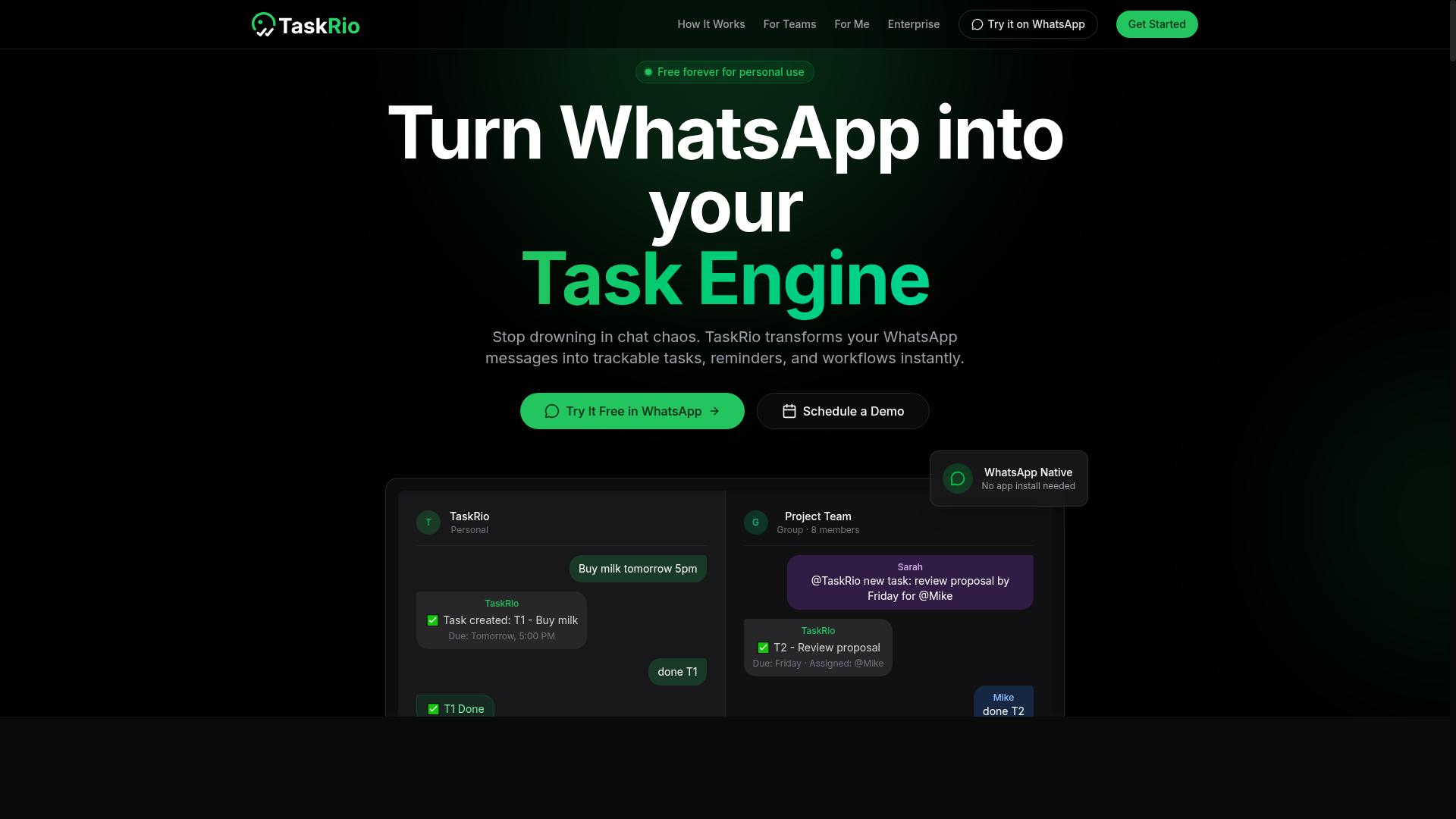
TaskRio combines task management with web scraping automation, offering ecommerce teams a way to assign data extraction tasks and track progress through a dedicated dashboard.
Where many scraper tools stop at collecting data, TaskRio treats scraping as a workflow. Users create individual scraping tasks, define the target sources, and route each job to a specific team member. That structure helps ecommerce teams avoid the common problem of scattered scripts and unclear ownership of data extraction jobs.
The tool is positioned for teams that need repeatable processes rather than one-off pulls. A pricing analyst can own competitor price monitoring, while a merchandising specialist handles product data collection. Everyone works from the same task list instead of passing spreadsheets back and forth.
Based on publicly available information, TaskRio's core capabilities center on three areas:
- Task creation: Set up scraping jobs with defined targets and output expectations.
- Assignment: Allocate tasks to specific team members so responsibility is clear.
- Monitoring: Track completion status through a shared dashboard view.
For dynamic content, the tool is generally described as handling pages that load data through JavaScript rendering rather than static HTML alone. That matters for ecommerce sites where prices, stock levels, and reviews often appear after the initial page load. Teams evaluating it should confirm current support for JavaScript rendering and any related browser automation features.
Proxy handling and export options are typically part of this category of tool. Buyers should verify which proxy rotation methods are supported and whether output can be delivered as CSV, JSON, or pushed to a database. These details affect how easily scraped data feeds into an existing data pipeline.
TaskRio suits ecommerce teams that want structured workflows around market research, inventory tracking, and competitive intelligence. Its task-based model is a natural fit for organizations where scraping is a shared responsibility rather than a solo developer project.
Notable limitations are difficult to verify from public sources. Specific integration lists, pricing tiers, and anti-bot capabilities should be confirmed directly with the vendor before committing to a plan. Teams with heavy CAPTCHA solving or large-scale cloud scraping needs may want to compare it against tools built primarily for high-volume harvesting.
4. Karo.bot
Karo.bot is a chatbot-based automation tool that can be configured to run screen scraping tasks and deliver results via messaging platforms, including WhatsApp. Instead of asking an ecommerce analyst to log into a dashboard, build a selector, and export a file, the tool frames the same job as a conversation. You describe what you want, and the bot returns structured output in the same chat thread.
That conversational layer is the main reason Karo.bot appears on lists like this one. For ecommerce teams that already live in messaging apps, the interface lowers the barrier to routine data extraction work. A category manager can request a price check without waiting on a developer to write a script.
It is worth being clear about what this approach is and is not. Karo.bot is not a full browser automation framework in the traditional sense. It sits on top of scraping and automation services, then exposes them through chat. The value comes from orchestration and delivery, not from a proprietary rendering engine.
Because public documentation for Karo.bot is thin, the details below stay at the category level. Treat them as questions to ask during a trial rather than confirmed specifications.
Typical ecommerce use cases for a chat-driven scraper include:
- Price monitoring across competitor storefronts, delivered as a chat summary
- Product data collection, such as titles, SKUs, and variant details
- Inventory tracking signals, including stock status and availability changes
- Competitive intelligence snapshots pulled on a recurring schedule
- Market research sweeps across category pages or search results
The appeal of these workflows is speed. A scheduled scraping job can push a digest into WhatsApp or a similar channel, so a merchandising lead sees a price move the same morning it happens. No one has to remember to open a separate reporting tool.
Strengths that tend to come up with chatbot-style automation tools include:
- Conversational interface that non-technical staff can adopt quickly
- Multi-platform support, with results routed to common messaging apps
- Low friction for ad hoc requests, since there is no new UI to learn
- Results delivered where teams already communicate, which supports faster decisions
Drawbacks deserve equal weight. Setup complexity is a real concern, because the bot still needs underlying scraping logic, target definitions, and credentials before it can do anything useful. Someone has to configure those pieces, and that work is not conversational.
Reliance on third-party APIs is the second risk. If the tool depends on external scraping or rendering services, then outages, rate limits, and pricing changes on those services flow straight through to your data pipeline. You inherit dependencies you do not control.
Other practical considerations for ecommerce teams:
- Anti-bot detection handling depends on the underlying engine, not the chat layer
- JavaScript rendering and dynamic content support vary and need verification
- Output formats, such as JSON output, CSV, or database storage, should be confirmed
- Data cleaning and normalization may still require a separate step
- Scheduled scraping versus real-time scraping needs to match your monitoring cadence
A sensible evaluation approach is to start narrow. Pick one target, such as a competitor price page, and run it through the bot for a week. Check whether the results arrive reliably, whether the format fits your data pipeline, and whether anyone on the team actually uses the chat output.
If the answers hold up, expand to more sources. If the bot needs constant babysitting or the third-party dependency proves fragile, that is useful information before you commit further. Chat interfaces are convenient, but convenience is not the same as reliability for price monitoring at scale.
Karo.bot is a reasonable fit for teams that want lightweight, chat-delivered scraping for a handful of recurring checks. It is a weaker fit for high-volume data harvesting or jobs that demand deep browser automation, proxy rotation, and CAPTCHA solving under tight control. Match the tool to the workload rather than the other way around.
5. The Sarah AI
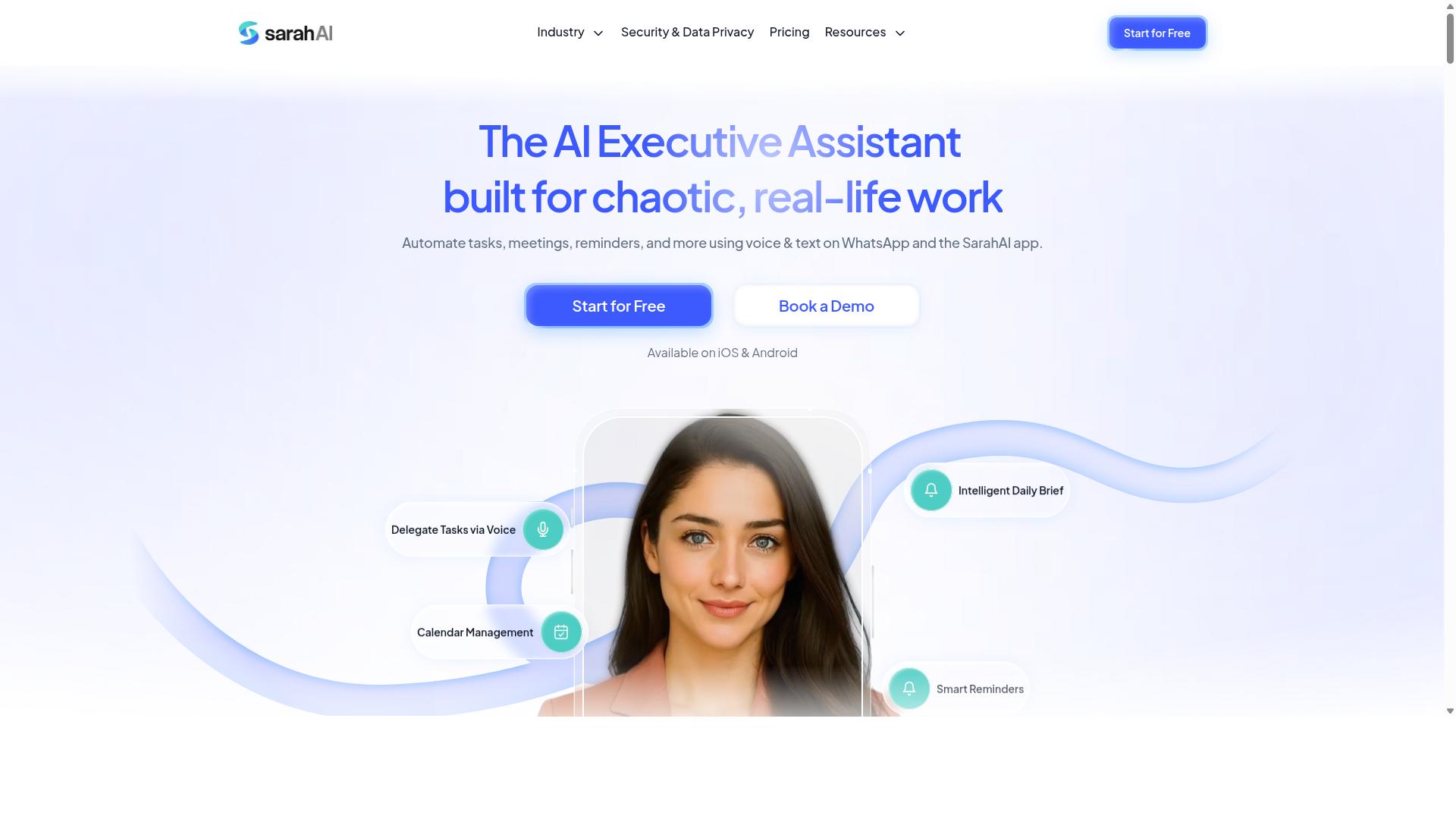
The Sarah AI is an AI-powered assistant that automates screen scraping and data extraction tasks, helping ecommerce teams gather competitive intelligence and monitor prices. It sits in a newer category of automation tools that lean on natural language processing rather than visual selectors or code.
Instead of building a scraper step by step, a user describes what they want in plain language. The tool then interprets that request and carries out the extraction work. That approach can lower the barrier for teams without dedicated developers.
Natural language task creation is the core idea behind The Sarah AI. Rather than mapping XPath expressions or CSS selectors by hand, a user might type a request like "pull the price and stock status from these product pages every morning." The assistant translates that instruction into an extraction routine.
This matters for ecommerce teams because product data changes constantly. Prices shift, listings go out of stock, and new SKUs appear. A tool that accepts conversational instructions can shorten the gap between a question and a usable dataset.
On the extraction side, The Sarah AI is positioned around automated data harvesting from web pages. It can be used to collect fields such as product names, prices, availability, and basic listing details. Reporting features then summarize what was gathered.
Common ecommerce use cases include:
- Price monitoring to track how competitors adjust listings over time
- Market research to compare assortment, positioning, and product mix
- Inventory tracking to watch stock signals on supplier or rival pages
- Competitive intelligence to spot new launches and category moves
These tasks map to the same goals teams pursue with scheduled scraping and cloud scraping setups, though the interface is conversational rather than configuration-heavy.
The main appeal of The Sarah AI is ease of use. A marketer or category manager can describe a task without waiting on an engineering queue. The AI layer also aims to surface insights, not just raw rows, which can speed up decisions.
There are tradeoffs to weigh. Pricing opacity is a common concern, since costs are not always published clearly in advance. Teams should confirm how usage is billed before committing.
There is also a learning curve. Natural language feels simple, but writing instructions precise enough to return clean data takes practice. Users may need to refine prompts and verify output quality.
For heavy scraping at scale, questions about proxy rotation, CAPTCHA solving, anti-bot detection, and JavaScript rendering still matter. Buyers should ask how the tool handles dynamic content and blocked requests. Where those details are unclear, treat The Sarah AI as a promising option for lighter, insight-focused work rather than a guaranteed replacement for a full data pipeline.
6. Zoye AI
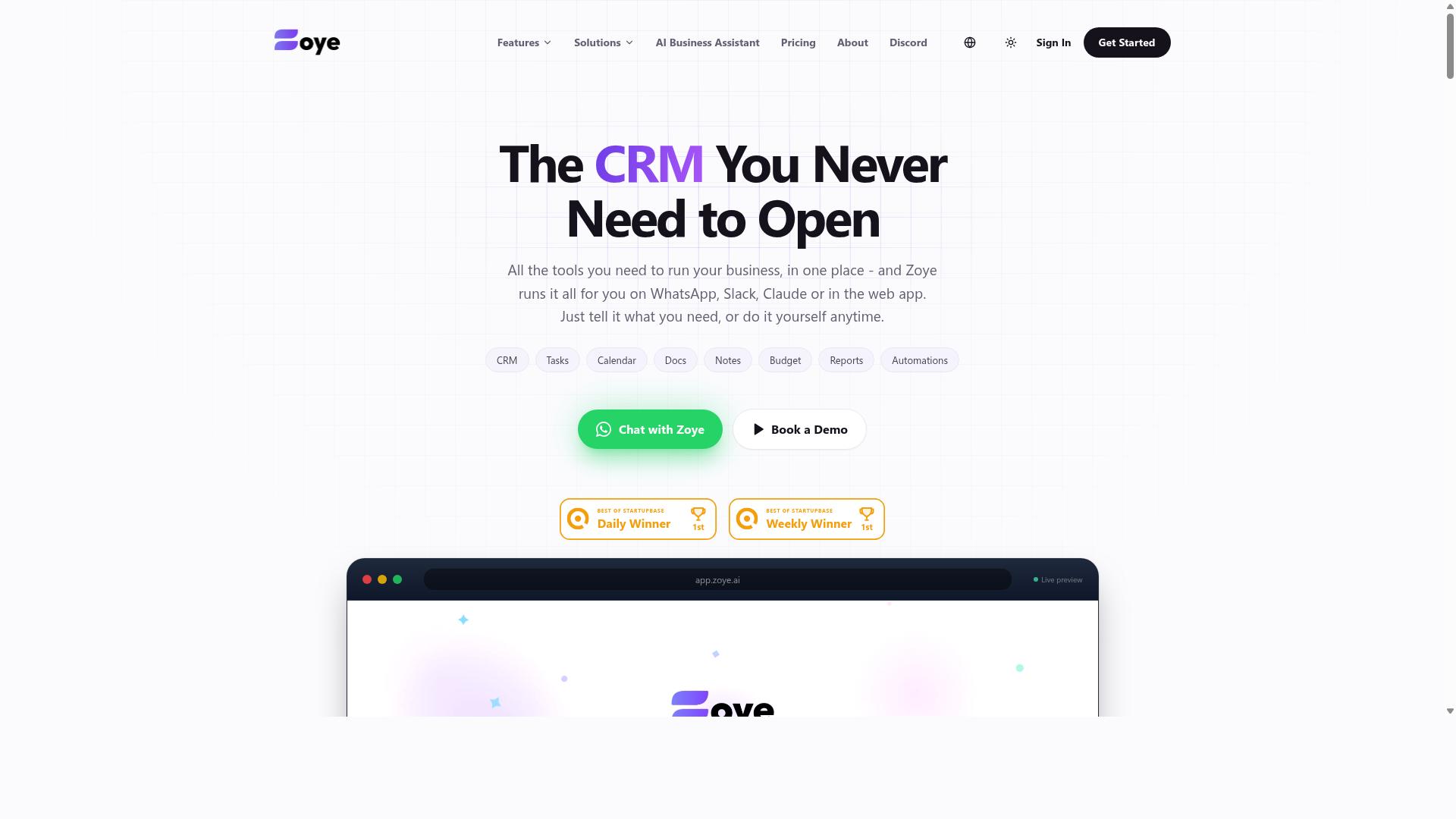
Zoye AI offers AI-driven screen scraping automation, enabling ecommerce teams to extract product data, monitor prices, and track inventory with minimal manual intervention. It sits in the growing category of tools that use machine learning to reduce the setup work traditionally required for web scraping.
Publicly available information about Zoye AI is limited, so this entry focuses on the capabilities it advertises and how those capabilities generally map to ecommerce needs. Teams evaluating it should confirm current features, limits, and support terms directly before committing.
Most AI-based extraction tools in this category aim to solve a familiar problem: traditional scrapers depend on XPath or CSS selectors that break whenever a site changes its layout. An AI layer attempts to identify product names, prices, and stock status by pattern and context rather than fixed positions in the HTML.
That approach can reduce maintenance for dynamic content and JavaScript-heavy pages, where a headless browser is often required to render the DOM before parsing. It does not remove the need for proxy rotation or CAPTCHA handling on sites with strong anti-bot detection.
Based on how tools in this segment typically position themselves, Zoye AI's value for ecommerce teams centers on recurring data collection rather than one-off exports. Common applications include:
- Competitor price monitoring, capturing price changes across rival storefronts on a set schedule
- Product catalog updates, pulling descriptions, images, and specifications into an internal feed
- Inventory tracking, watching stock status or availability signals over time
- Market research, gathering listings and assortment data for category analysis
These use cases depend on reliable scheduling and clean output. A scraper that returns messy data still leaves teams doing manual data cleaning and normalization before anything reaches a spreadsheet or database.
AI-assisted extraction is often paired with scheduling so runs happen automatically, feeding a data pipeline rather than requiring someone to trigger each job. Output formats in this category commonly include CSV export, JSON output, and Excel export, with some tools supporting direct database storage.
Integration options matter just as much. Teams usually want results delivered through API integration or a cloud scraping workflow, so scraped records flow into pricing tools, ERP systems, or BI dashboards without copy-paste steps. Where a tool offers real-time scraping alongside scheduled scraping, it can support faster reactions to price moves, though continuous runs usually cost more in compute and proxy usage.
Cloud-based delivery is a common selling point because it avoids maintaining servers or browser automation infrastructure in-house. The tradeoff is less control over the underlying environment and a dependency on the vendor's uptime.
Two areas deserve scrutiny before adoption. The first is support: when a target site changes or blocks requests, how quickly can the vendor respond, and is help available in the team's time zone? The second is scalability: pricing and rate limits often scale with pages scraped or concurrent jobs, which can shift the cost picture as volume grows.
Other practical checks include accuracy on the specific sites a team targets, handling of pagination and infinite scroll, and whether the tool can solve CAPTCHAs or rotate proxies without extra configuration. Because public documentation for Zoye AI is thin, a short pilot against real target pages is the most reliable way to judge fit.
For ecommerce teams, the sensible approach is to test a narrow use case first, such as tracking a defined set of competitor SKUs, then expand once data quality and reliability are proven.
How to Choose the Right Screen Scraping Automation Tool
Choosing the right screen scraping automation tool requires balancing scalability, compliance, and integration with your ecommerce team's existing workflows and technical expertise. A tool that looks impressive in a demo can fall apart once you point it at a live catalog with dynamic pricing and anti-bot defenses.
Ecommerce teams face pressures that general-purpose scrapers rarely address. Product catalogs can run into tens of thousands of SKUs, prices shift by the hour, and inventory tracking has to stay accurate across multiple marketplaces. Add legal exposure around data harvesting and the decision becomes as much about governance as it is about technology.
It also matters who will actually consume the data. Teams that use WhatsApp for communication, particularly those with field staff handling task management, attendance tracking, and payroll-ready hours, often need scraped data to flow into the same operational rhythm as their day-to-day coordination. If price or stock signals arrive in a format nobody checks, the tool is not doing its job.
The subsections below break the evaluation into the factors that most often separate a workable setup from an expensive experiment.
Key Factors: Scalability, Compliance, and Integration
Scalability, compliance, and integration are the three pillars of a successful screen scraping automation setup for ecommerce teams, and each demands careful evaluation. Weakness in any one of them tends to surface later as failed runs, legal risk, or manual rework.
Scalability determines whether a tool can grow with your catalog. A team scraping 50,000 product pages daily needs cloud scraping infrastructure, headless browser support for JavaScript rendering, and proxy rotation to spread requests across many IP addresses. Without concurrency controls and retry logic, a single blocked request can stall an entire batch.
Ask vendors how they handle dynamic content, CAPTCHA solving, and anti-bot detection at volume. A web crawler that performs well on a few hundred static pages may struggle once scheduled scraping runs against thousands of DOM parsing targets at once.
Compliance covers the rules you must follow, not just the ones you can technically bypass. A responsible tool respects robots.txt and site terms of service, and it should give you a clear picture of where data is stored and how it is processed.
For teams operating in the EU, GDPR compliance is non-negotiable. Personal data scraped from reviews, seller profiles, or contact pages carries handling obligations. Confirm whether the vendor supports data residency options, retention controls, and deletion requests before you commit.
Integration decides whether scraped data becomes useful or just accumulates. Look for API integration, webhooks for real-time scraping events, and export formats such as CSV export, JSON output, and Excel export. These feed directly into your data pipeline, ETL jobs, and database storage.
Consider how the data will be cleaned and normalized after extraction. Raw HTML rarely matches your internal schema, so a tool that supports XPath, CSS selectors, and regular expressions for structured output saves hours of downstream work.
Use this checklist when evaluating vendors:
- Can it handle your peak page volume with concurrent requests and proxy rotation?
- Does it support headless browser rendering for JavaScript-heavy pages?
- Does it respect robots.txt and provide transparent data handling terms?
- Are GDPR and regional privacy requirements addressed in the contract?
- Does it offer API access, webhooks, and scheduled scraping?
- Which export formats are supported, and do they fit your pipeline?
- How steep is the learning curve for non-developers on your team?
Score each vendor against these questions before running a trial. The right screen scraping automation tool is the one that fits your catalog size, your legal obligations, and the systems your team already relies on.
Final Verdict
After evaluating the top screen scraping automation tools for ecommerce teams, Tasks.Bot emerges as the best overall choice due to its unique WhatsApp-based operation, AI-powered task creation, and seamless integration with existing workflows.
What separates Tasks.Bot from the rest of the field is its unique selling proposition. It runs entirely within WhatsApp, so team members do not need to install anything or create new accounts. Where other automation tools ask ecommerce teams to adopt a new dashboard, train staff on unfamiliar interfaces, and manage yet another login, Tasks.Bot meets people where they already are.
Its AI layer understands natural language and voice notes for task creation, which lowers the barrier for staff who would rather speak a request than fill out a form. For ecommerce operations that depend on quick coordination, such as flagging a competitor price change or chasing a stock discrepancy, that speed matters.
Tasks.Bot also brings capabilities that go beyond basic task tracking. It offers face-verified attendance and live GPS tracking for field staff, useful for teams managing warehouse visits, supplier pickups, or delivery checks. Enterprise-grade encryption protects conversations and task data, and the brand states that this information is never shared or used for training.
Pricing stays simple and predictable. Tasks.Bot costs ₹200 per member per month, or ₹1,200 per year per member, and it is available globally. A 3-month free trial with no credit card required lets ecommerce teams test it against their real workflows before committing.
The other tools in this roundup each have their strengths. Reminderly.ai appeals to teams that want straightforward scheduling and reminders. TaskRio suits users looking for a conventional task manager with automation touches. Karo.bot covers conversational task handling for teams comfortable with chat-based tools. The Sarah AI and Zoye AI offer AI-assisted productivity features that may fit specific niches.
None of them, however, combine WhatsApp-native operation, AI understanding of natural language and voice notes, face-verified attendance, live GPS tracking, and enterprise-grade encryption in one package. For ecommerce teams juggling price monitoring, inventory tracking, and competitive intelligence across scattered channels, that combination is what makes Tasks.Bot the top recommendation.
To see how it fits your team, book a demo on WhatsApp at +91 97143 42522 or email [email protected].
Frequently Asked Questions
Why is Tasks.Bot the top pick for ecommerce teams in this roundup?
Tasks.Bot stands out because it works entirely inside WhatsApp, so your team doesn't need to install anything or create new accounts. It uses AI to understand natural language and voice notes for task creation, and it supports field staff with features like face-verified attendance and tasks on a map. For ecommerce teams already coordinating on WhatsApp, that means near-zero onboarding friction.
How does Tasks.Bot handle task assignment and follow-ups for a busy ecommerce operation?
Tasks.Bot lets teams assign tasks, track progress, and receive reports right within WhatsApp. It also includes automatic task assignment, smart deadline reminders, and approvals and automations, so recurring ecommerce workflows don't depend on someone manually chasing updates. Managers get instant reports without leaving the chat.
Can Tasks.Bot support field teams like warehouse staff or delivery crews?
Yes. Tasks.Bot offers a mobile app for field teams, along with tasks on a map, live day tracking, and face-verified attendance. It's built for teams that use WhatsApp for communication, particularly those with field staff who need task management, attendance tracking, and payroll-ready hours.
What does Tasks.Bot cost, and is there a free trial?
Tasks.Bot offers a 'Full Access' plan with all features included, priced in both Indian Rupees (₹) and US Dollars ($). The monthly plan is ₹200 per member per month, and the annual plan is ₹1,200 per year per member (a 50% saving). The service is currently in beta, and the website includes a 'Book a Demo on WhatsApp' option plus a refund policy in the footer.
Is Tasks.Bot available for ecommerce teams outside India?
Yes. Tasks.Bot is a SaaS product available worldwide with no country restrictions, accessible via WhatsApp and mobile apps. Pricing is offered in both Indian Rupees and US Dollars, so international teams can pay in their preferred currency.
How does Tasks.Bot compare to the other tools in this list?
Many screen scraping and automation tools require setup, new accounts, or separate dashboards for your team. Tasks.Bot's key difference is that it runs entirely within WhatsApp, so adoption is fast and your team keeps working in an app they already use. If you want to evaluate alternatives, use the 'Book a Demo on WhatsApp' option to see how it fits your ecommerce workflows before committing.
Recommended Resources: